The Secrets Behind Cat Snoring
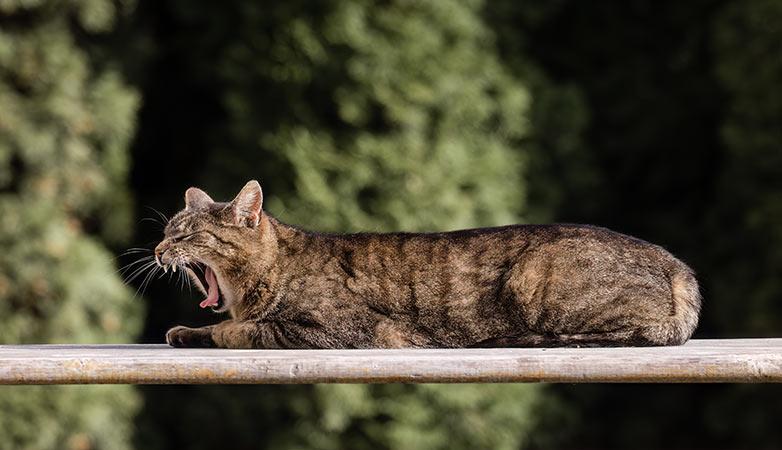
Cats sleep for on average 16 hours a day, so it’s highly likely that you've heard your cat snoring at some point. But you may be wondering should cats snore? Why do cats snore? And can I stop my cat from snoring? In this article we cover everything you need to know about cat snoring.
Is It Normal for Cats to Snore?
Just the same as in dog snoring, cat snoring is normal and common. It usually happens when your cat is sleeping and is in 'deep' or REM (rapid eye movement) sleep. If your cat snores loudly, it may be due to their sleeping position.
Sleeping in certain or strange positions can compress the tissues around the upper airways. But a cat snoring loudly or snoring when awake can also be a sign of respiratory issues, so it should be checked by your vet.
Why Does My Cat Snore?
If air moves in a straight line, with no obstructions, then it is virtually silent. If air swirls and changes direction, as when obstructions are in its path, it makes noise, and if air is channelled through a small hole, it can make a whistling sound. Now imagine this applied to your feline friend and their smaller nostrils.
Snoring in cats is caused by loose tissues at the back of the throat, including the soft palate, uvula, and tonsils, which act as obstructions to linear airflow. These tissues relax when your cat is sleeping, creating partial obstructions to airflow. As air passes through and around them, they vibrate, producing the sound of snoring.
7 Common Reasons for Cat Snoring
Now that we know why cats snore in normal circumstances, let's investigate when snoring could signal other issues.
1. Asthma and Allergies
Asthma in cats causes inflammation of the airways, compressing the tissues and restricting airflow. Other symptoms include wheezing, coughing and difficulty breathing.
2. Chronic Rhinitis
Long-term inflammation of the nasal passages can cause snoring. Cats that have recovered from the flu can suffer from ongoing inflammation caused by scarring or damage to the tissue in the nasal passage.
Other reasons include nasopharyngeal polyps, usually benign and found in younger cats, and neoplasia (cancer), which is more common in older cats.
3. Facial Features or Face Shape
Brachycephalic cats (flat-faced cats), like exotic short-haired cats and Persians, are prone to snoring. Other cat breeds have an elongated palate, whereas brachycephalic cats have the same amount of tissue surrounding the upper airway, but they're squashed into a shorter nasal passage. This restricts airflow, causing the cat to snore.
4. Foreign Objects
Cats can get objects, such as blades of grass, stuck in their nasal passages or behind their elongated soft palate. If your cat has something partially blocking its nose or throat, it may sneeze repeatedly, paw at its face, or have nasal discharge from one side of its nose.
5. Infections
Viruses such as Feline herpesvirus (FHV-1) and Feline calicivirus (FCV) can cause upper respiratory infections. This can cause inflammation and narrowing of the throat and nasal passage, resulting in snoring. Fungal infections, such as aspergillosis, and bacterial infections, like Bordetella bronchiseptica, can cause airway inflammation and irritation but are less common causes of snoring.
6. Obesity
Snoring is common in obese or overweight cats because excess fat pushes down on the tissues at the back of the throat.
7. Trauma
Cats that have suffered from head trauma, often caused by a collision with a car, are more likely to snore. Head injuries often cause tissue damage and inflammation in the nose, throat or jaw. Most cats will stop snoring when they've fully recovered.
Should I Be Concerned That My Cat Snores?
In most cases, you don't need to worry about your snoring cat, but if they're also showing health or behavioural signs, then you should contact your vet.
You'll also need to monitor the way your cat snores. If it gets louder or more frequent, it could be a sign of a health issue. Seek veterinary advice if your snoring cat displays any of the additional signs:
- Coughing, sneezing or wheezing
- Difficulty breathing
- Drooling
- Lethargy or dullness
- Nasal discharge (including blood)
- Not eating
- Open-mouth breathing (this is a veterinary emergency – call your vet straight away if your cat is open-mouth breathing or panting)
- Pawing or clawing at their face
- Retching or vomiting
- Swellings of the mouth or throat
Also, keep an eye out for behavioural changes, such as aggression, hiding or reduced interaction with family members.
Can Cat Snoring Be Treated?
So, how can you treat snoring in cats? In most cases, snoring causes no problems, so no treatment is necessary, but if an underlying health issue is causing your cat to snore, it may require treatment.
Snoring in overweight cats can be reduced, or even completely stopped, by shedding this excess weight. This will also help to prevent obesity-related health issues.
Speak to your vet about putting your cat on a weight loss program. You should encourage your cat to exercise regularly, gradually increasing their activity level, to help them lose weight.
If your cat has an upper respiratory tract infection or has suffered tissue damage and inflammation, the snoring should stop when they're fully recovered. Humidifiers may help to reduce your cat's snoring as they help to moisten the airways.
Snoring in Brachycephalic Cats
Snoring in brachycephalic cat breeds is unfortunately quite common. Keeping your cat at a healthy weight will help to reduce snoring and other health issues associated with short noses.
Brachycephalic cat breeds include:
If your cat is finding it difficult to breathe, surgery may be required to remove some of the tissues to enable better airflow.
When Should You Speak to Your Vet About Cat Snoring?
If you've never heard your cat snore before and they suddenly start to, it's best to get them checked by your vet in case there is an underlying health problem.
Some cats are more prone to snoring than others. Like humans, cats snore when their throat tissues vibrate as air passes through them. This is amplified when the tissues are inflamed or squashed.
If you are concerned by your cat's snoring or have noticed any health or behavioural signs, you should get them checked by your vet. Otherwise, there's no need to worry, but you will need to get used to the noise!
Everypaw Cat Insurance
Everypaw's Cat Insurance comes with 24/7 unlimited access to vets and vet nurses that can help with your pet's health, care, nutrition and behaviour. So you can rest assured your kitty will be well looked after.
Content provided from Vetstream's Vetlexicon Felis
Vetlexicon is the world’s largest peer-reviewed online clinical reference source. All our content is written and peer-reviewed by over 1,000 of the world’s leading veterinarians, ensuring relevance, accuracy and quality.
- Taylor A & Vetstream Ltd (online) Snoring in cats. In: Vetlexicon Felis. Vetstream Ltd, UK.
- Godfrey D & Walker C (online) Allergies and how to help your pet avoid allergens. In: Vetlexicon Felis. Vetstream Ltd, UK.
- Vetstream Ltd (online) Asthma in cats. In: Vetlexicon Felis. Vetstream Ltd, UK.
- Vetstream Ltd & Godfrey D (online) Brachycephalic upper airway obstruction syndrome. In: Vetlexicon Felis. Vetstream Ltd, UK.
- Vetstream Ltd (online) Brachycephalic upper airway obstruction syndrome. In: Vetlexicon Felis. Vetstream Ltd, UK.


