Himalayan Cat Insurance, Care and Health Advice
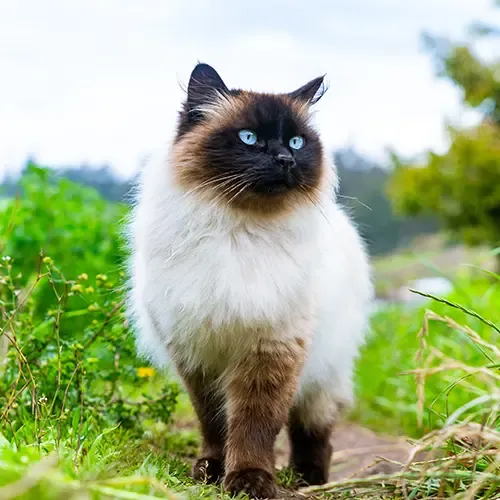
The Himalayan Persian, or Himalayan for short, is affectionately known as the 'Himmy'. They resemble the Persian cat, with a large, short, heavy body that's low to the ground and a long, thick coat. Fun-loving, playful and affectionate, if you've got the time to give this cuddly, fluffy cat everything they need, they'll give you all the love back.
Himalayan Cat Facts


Is a Himalayan Right for Me?
If you're looking for a fun-loving, affectionate cat, then look no further. They love to be cuddled and won't mind spending hours on the sofa with you for plenty of chill time. While Himmies are a very calm cats, they also have plenty of energy for playtime, so you get the best of both worlds.They're generally happy to be anyone's friend.
Classed as a colour variation or sub-breed of the Persian, Himalayans aren't recognised as a distinct breed. Created by breeding Persian cats with Siamese cats, their descendants were then bred with Siamese cats to retain the distinctive large, round, blue eyes and pointed colouring, with darker colours on the face, ears, feet, and tail.
Because of their appearance, the Himalayan cat breed can be quite high-maintenance. That gorgeous thick, long coat, needs plenty of regular TLC to keep it clean and knot-free. But, grooming is an excellent way of bonding with your Himmy.
What are Himalayan Kittens Like?
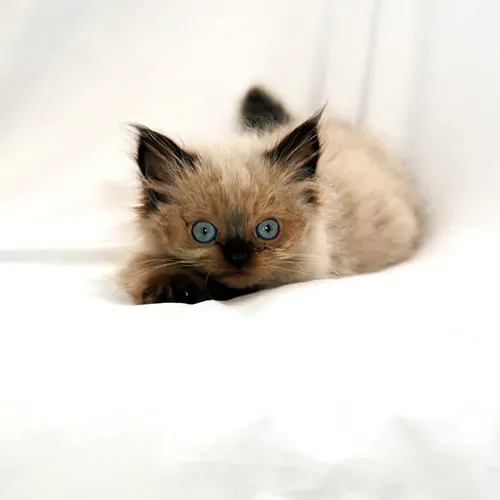
Himalayan kittens are usually born white, but slowly start to show their colour points as they grow. They also have those beautiful, bright blue eyes of the Siamese from the moment they're born.
These kittens are super cute bundles of fluff, and their Himalayan cat characteristics are there from the start, so they're usually full of playful energy. They'll soon wear themselves out, though, and will be snoozing on the sofa before you know it.
Life with a Himalayan cat
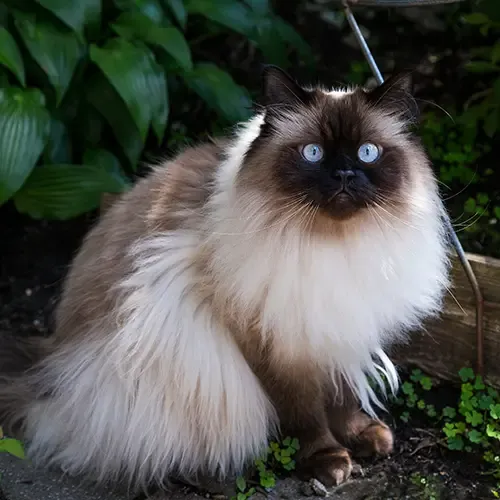
Thanks, in no small part, to their Persian and Siamese heritage, life with a Himmy will be full of love, fun, cuddles, play and chill time.
Himalayan cats enjoy lots of fuss and attention and will be happy doing whatever you want. They aren't exactly athletes, though, so you won't see them climbing the curtains or scaling the wardrobe. They're much more content napping and having quiet time on the sofa. After a nap, they'll be up for some playtime.
They tend to have short bursts of playful energy, so make the most of these times to help them stay fit and healthy. These are pretty smart cats, too, so they will soon learn any tricks you want to teach them!
Caring for Your Himalayan
Known for being a bit lazy, Himalayans can pile on the weight. Keep an eye on their waistline and make sure you don't overfeed your Himmy. Check out the food packaging for guidelines. Because of their long fur, Himmies can be prone to hairballs, so it might be worth feeding a cat food specially formulated to help control this. If you want more advice on feeding your Himmy, your vet will be happy to help.
If you haven't got the time to dedicate to grooming, then a Himalayan probably isn't the right sort of cat for you. Due to their long, thick hair, Himalayan cats require regular grooming to prevent knots and tangles. They shed quite a bit, so grooming also removes any dead hair.
Start grooming your Himalayan from an early age so they get used to the routine. It's also a great time for bonding with your cat. You can also take your cat to a professional groomer a few times a year to keep their coat clean, healthy, and looking fabulous.
Himmies are intelligent cats, so training should be a piece of cake. They love to interact and be with their owners, so encouraging them to learn new things is a breeze.
Himalayans don't need much exercise; half an hour every day is plenty. But they can be really playful and might get up to no good if they get bored. Keep them entertained by giving them lots of cat toys to play with, and take some time every day to play with them.
Himalayan Cat Insurance
If you've read this far on our Himalayan cat breed guide, you'll already know how intelligent, loving and playful these kitties are. So, it could make sense to get them covered with cat insurance that's just as smart as they are.
Everypaw’s Lifetime Cat Insurance could be just what the doctor (or vet) ordered. With a selection of cover levels to choose from, there’s plenty of options to make sure you get the best cover for you and your gorgeous Himmy.
What's more, all of our policies also come with additional benefits as standard, such as complementary treatment, cover for vet fees anywhere in Europe (if you decide to take them away with you) and help towards finding your cat if they become lost or stolen, plus a whole lot more. Check out our Cover Explained section for more information.
Common Himalayan Cat Health Problems by Vetstream
Himalayans can suffer from a few health issues. We've got together with veterinary experts Vetstream to give you an idea of what to keep an eye out for in your Himmy.
BUAS is the name given to the group of congenital anatomical defects present in brachycephalic cats. Flat-faced cats like the Himalayan have shortened noses and jaws. As a result, affected cats struggle with respiratory problems. Cats may have trouble breathing, especially in hot weather and when running about. Eye and dental problems can also be an issue in cats with BUAS.
Hip dysplasia affects the joints, bones, and surrounding tissues such as muscles and cartilage. It causes pain, lameness and eventually leads to arthritis.
If you think your Himmy might be suffering from hip dysplasia, your vet can take some X-rays to see what's going on. Treatment will probably include anti-inflammatory drugs and, in severe cases, surgery.
Hip dysplasia can be prevented by not breeding from affected cats. Before buying a kitten, ask the breeder if their breeding cats have a record of being free from hip dysplasia.
PKD is an inherited condition. Kittens are born with kidney cysts that gradually enlarge, preventing the kidneys from working properly.
In the early stages of the disease, there are generally no signs. As the condition gets worse, common signs like anorexia, weeing and drinking more, constipation, weight loss and muscle wastage might be seen. An ultrasound scan can confirm whether your cat has PKD.
There's a genetic test Himalayan cat breeders can use to make sure their cats are free of PKD. Breeders should only breed from cats that test negative. If you buy your kitten from a responsible breeder, ask if their cats have been tested before buying.
Luckily, this eye condition isn't very common. It's an inherited condition caused by a gene mutation, so it can't be treated.
Cats with one copy of the gene responsible for this condition will have normal vision but can pass on the gene to their offspring. Cats with two copies of the gene will develop the condition.
PRA can lead to vision loss and blindness. A genetic test is available to test for this genetic defect. Affected cats should be removed from any breeding programmes.

Quick Himalayan Q&A
These cats are a mix of Siamese and Persian breeds. They're long-haired with coloured points, giving them their characteristic look.
They were first developed in the United States by Virginia Cobb and Clyde Keeler in the 1930s and recognised by the Cat Fanciers Association in 1957.
A breeding programme for Himalayans in the UK began in 1935, but was interrupted by World War II. It eventually established itself in the UK and was recognised as a 'long-haired colourpoint' by the Governing Council of the Cat Fancy (GCCF) in 1955.
Prices range a lot for Himmies. A well-bred kitten from a responsible breeder will cost anything from £500 to £1500. When you buy a kitten, ask lots of questions to make sure your kitten comes from a healthy line of cats, to maximise the chances of your kitten living a long and healthy life.
Himalayan cats are super friendly! They're fun-loving, affectionate and love nothing more than spending time with their human family. Your Himmy will make a great companion if you live alone. They also make a great addition to your family if you have children or other pets.
Himalayans are usually kept as house cats. Unfortunately, they're a popular cat breed that is vulnerable to theft. They're also not very street-savvy, so they may not do well defensively against other outdoor cats. Their long, thick coat can also get very dirty and matted if allowed outdoors, especially in the wintertime.
If well cared for, your gorgeous Himmy can be with you for about 12-15 years.
That’s All You Need to Know About Himalayans
This stunning cat has all the traits you'd look for in a perfect pet cat. Whether you live alone or have a family, they'll have their feet under your table in no time. As long as you don't mind spending time taking care of their long, fluffy locks, they'll give you so much in return.
Content provided from Vetstream's Vetlexicon Felis.
Vetlexicon is the world’s largest peer-reviewed online clinical reference source. All our content is written and peer-reviewed by over 1,000 of the world’s leading veterinarians, ensuring relevance, accuracy and quality.
- Johnson L (online) Himalayan. In: Vetlexicon Felis. Vetstream Ltd, UK.
- Langley-Hobbs S & Wallace A M (online) Hip: dysplasia. In: Vetlexicon Felis. Vetstream Ltd, UK.
- Mitchell N & Gould D (online) Retina: inherited degenerations. In: Vetlexicon Felis. Vetstream Ltd, UK.
- Vetstream Ltd & Korman R (online) Autosomal dominant polycystic kidney disease. In: Vetlexicon Felis. Vetstream Ltd, UK.
- Vetstream Ltd & Godfrey D (online) Brachycephalic upper airway obstruction syndrome. In: Vetlexicon Felis. Vetstream Ltd, UK.
- Vetstream Ltd & Fisher R (online) Persian Longhair. In: Vetlexicon Felis. Vetstream Ltd, UK.
- Vetstream Ltd & Fisher R (online) Siamese. In: Vetlexicon Felis. Vetstream Ltd, UK.


