Basset Hound Insurance, Care and Health Advice
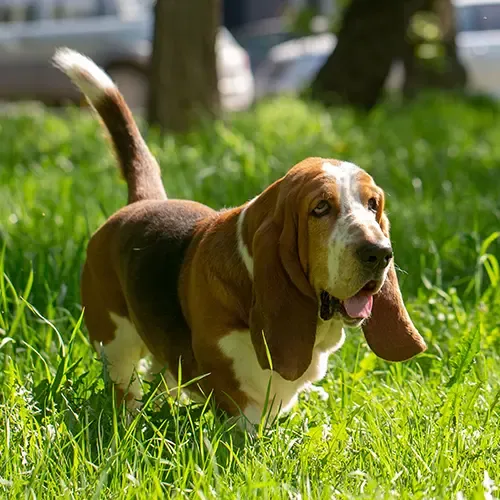
The Basset Hound originated in the sixth century in France, where they were used to hunt rabbits, hares and deer. The breed we see today has shorter legs, is lower to the ground and heavier than its ancestors, who would have been more agile for hunting!
Basset Hound Facts


Is a Basset Hound Right for Me?
If you're looking for a dog that'll be very active and go jogging or cycling with you, then this isn't the breed for you. But if you want an easy-going, gentle, patient canine companion that will join you on the sofa and is great with children, the Basset Hound's temperament is perfect.
They do enjoy their walks, though, and need regular exercise. They may not be the most obedient dogs, but they're just so lovable that you'll forgive their wayward ways!
The breed is known for its wrinkly skin, floppy ears, short legs (a form of dwarfism) and long nose. They hunt by scent and make excellent trackers. Their name comes from the French word "bas", meaning low.
What Are Basset Hound Puppies Like?
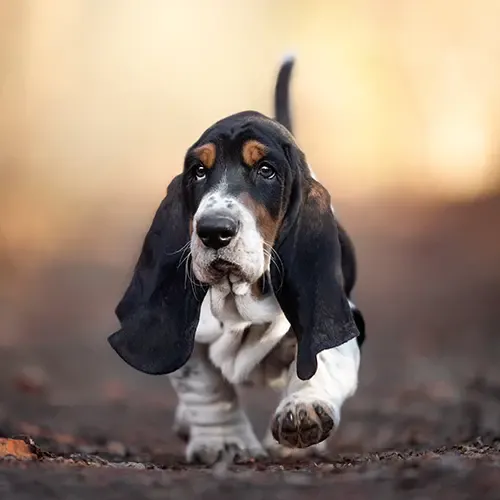
With their long ears and short legs, these puppies are adorable. Early puppy socialisation will ensure that they're friendly and get on with everyone.
Bassets are heavy boned, so puppies don't fully mature or reach their full size until they're around 18 months to 2 years old. It's best not to over-exercise them while they're still growing, as this can put strain on their joints. They also shouldn't be allowed to run up and down the stairs.
Life with a Basset Hound
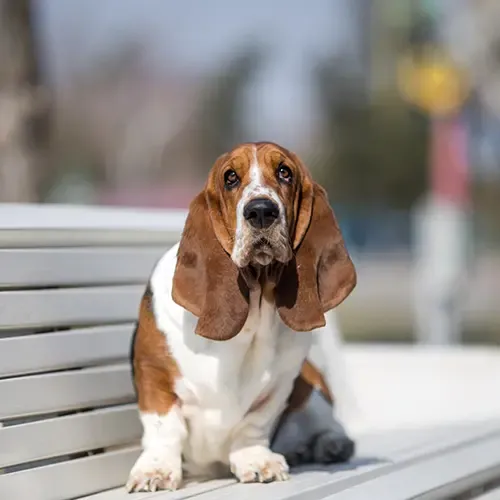
Second only to the Bloodhound in their scenting ability, the Basset will follow a scent, and nothing will distract them from their task. You may need to spend extra time on training and walking them on a lead or harness. Recall training will go out of the window when they scent something interesting. They like company, so separation anxiety may be an issue if everyone is out at work all day.
Caring for Your Basset Hound
Basset Hounds are happy to be lounging on the sofa all day and like their food, so weight gain can be an issue. Follow the guidelines on portion size on the food packet or ask your vet or vet nurse for advice. You may have to weigh out their food and cut out any treats to keep them at a healthy weight.
With their short hair, the Basset Hound dog breed is low maintenance. However, they do tend to shed a lot, but a weekly brush will remove any loose, dead hair. The occasional bath may be needed, as well as regular nail trimming.
Their long, floppy ears mean that they can suffer from ear infections, so it's a good idea to check their ears regularly. Signs of redness, irritation, swelling, bad smell or if they shake their heads or scratch their ears can all indicate an infection.
Basset Hounds are usually tri-coloured (black, white and tan) but are also seen in red and white, and lemon and white (bi-coloured).
Training a Basset can be a challenge – they can be stubborn and strong-willed! As they were originally bred to follow a scent without being distracted, they can be independent and go their own way, ignoring your commands. But with patience and positive, reward-based training, the intelligent Basset will become a well-mannered, loyal and devoted member of the family. Start training early!
Bassets need less exercise than other hunting dogs, but will still need regular exercise, either long walks or playtime in the garden. Aim for 30-60 minutes of moderate exercise every day to keep them fit and away from the sofa.
Basset Hound Insurance
At Everypaw, we're all about looking after you and your dog with insurance to suit. But we also know that every pooch is different, from Basset Hounds to Beagles and Pomeranians to Rottweilers, they're all unique. That's why we offer a range of cover to help keep your pup happy and healthy.
Our Lifetime Dog Insurance comes in a selection of levels. We've also added a helpful comparison table, so you can decide which is the best pet insurance policy for you and your hound.
That's not where the goodness ends though, our policies also come with a host of additional membership benefits. Get everything from 24/7 access to a UK vet team to overseas vet fee cover and even some sweet discounts on products from some of our friends in the pet health world.
Common Basset Hound Health Problems by Vetstream
Bassets can be prone to ear and skin infections as well as some inherited eye and joint conditions. Regular health checks will help to identify these. Everypaw has teamed up with veterinary experts Vetstream to help you spot any signs of the common health issues that can affect this breed.
Bassets can be affected by primary open angle glaucoma (POAG). This inherited eye condition causes increased pressure in the eye. POAG can be treated with topical antiglaucoma medication, but there isn't a cure. If the medication fails to work and the eyes remain blind and painful, removal of the eye (enucleation) may be needed.
ED is a collective name for a range of developmental orthopaedic conditions. These conditions prevent the elbow joint in growing dogs from developing properly. Bassets are prone to this condition, which causes lameness, pain and eventually arthritis in the elbow.
Some cases can be managed by weight loss, medication, restricted exercise and physiotherapy, while other cases may need surgery. As the condition is inherited, affected dogs shouldn't be used for breeding.
Basset Hounds can be prone to HD. The condition occurs when the ball and socket joint of the hip doesn't fit together properly. This causes the bones to rub together and damages the surface of the joint. This causes pain and leads to arthritis.
Anti-inflammatory medication, weight control and a restricted exercise programme may manage the condition in some cases, but surgery may be needed in more severe cases.
Before buying your puppy from a breeder, ask for the hip scores of the parents. A low hip score means that your puppy has a lower risk of developing the condition.
Deep-chested dog breeds like the Basset Hound can be prone to GDV. It's a serious condition that can be life-threatening. Gas builds up in the stomach, causing it to swell (bloat). The stomach can flop onto its side and twist. Urgent treatment is needed. Your vet can advise on ways to reduce the risk of this condition happening.

Quick Basset Hound Q&A
A Basset Hound's life expectancy can be up to 10 years or longer if well cared for. A good diet, exercise and regular health checks will ensure your dog stays in good health for as long as possible.
Yes, they tend to be moderate to heavy shedders despite their short coats. Regular grooming is needed to remove the loose, dead hairs. A weekly brush should do the trick. They'll lose their undercoat in spring and all the way through to autumn.
Bassets were originally bred as scent hounds by monks in France to hunt rabbits, deer and hares. Their long ears sweep up any smells, and their noses then pick up the scent.
Their low-slung bodies and short legs make them ideal for tracking through dense undergrowth. They can follow a scent without distraction and can work in packs.
Yes, Basset Hounds make excellent family pets. They're mild-mannered, easy-going, friendly and get on well with children and other pets. Just watch out for their stubborn streak and their determination to follow a scent!
That’s All You Need to Know About Basset Hounds
The Basset Hound is everyone's short-legged friend. With their laid-back temperament, these hounds are people-oriented and fit in well with families. They may not be the most obedient canine companion, and can be vocal, but it's hard not to love them.
Content provided from Vetstream's Vetlexicon Canis
Vetlexicon is the world’s largest peer-reviewed online clinical reference source. All our content is written and peer-reviewed by over 1,000 of the world’s leading veterinarians, ensuring relevance, accuracy and quality.
- Vetstream Ltd (online) Basset Hound. In: Vetlexicon Canis, Vetstream Ltd, UK.
- Williams D l & Oliver J (online) Glaucoma: primary open angle. In: Vetlexicon Canis, Vetstream Ltd, UK.
- VetFolio & Vetstream Ltd (online) Glaucoma. In: Vetlexicon Canis, Vetstream Ltd, UK.
- Burton N & Pettitt R (online) Elbow: dysplasia. In: Vetlexicon Canis, Vetstream Ltd, UK.
- Vetstream Ltd (online) Elbow dysplasia. In: Vetlexicon Canis, Vetstream Ltd, UK.
- Harari J & Langley-Hobbs S (online) Hip: dysplasia. In: Vetlexicon Canis, Vetstream Ltd, UK.
- Vetstream Ltd (online) Hip dysplasia. In: Vetlexicon Canis, Vetstream Ltd, UK.
- Ludwig L (online) Stomach: gastric dilatation / volvulus (GDV) syndrome. In: Vetlexicon Canis, Vetstream Ltd, UK.
- Vetstream Ltd & Gardiner A (online) Bloat (gastric dilation). In: Vetlexicon Canis, Vetstream Ltd, UK.


