How to Understand Rabbit Body Language
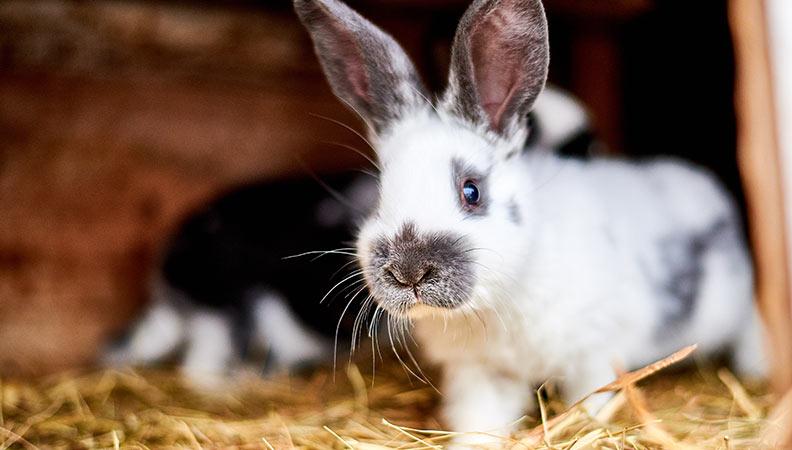
There are subtle signs that can be observed to indicate how your rabbit is feeling and whether your pet is displaying happy or unhappy rabbit body language, including being scared, stressed, aggressive or sick.
As a rabbit owner, it's important to know how to read your pet rabbit's body language to provide optimal care and spot early warning signs of stress or illness.
How Can You Tell If a Rabbit is Happy?
A relaxed stance indicates happy rabbit body language, often with the rabbits lying stretched out on their sides. You may even notice your rabbits flop. Your rabbit's eyes may half close, and they appear at ease.
Relaxed rabbit body language is often accompanied by nose twitching and, sometimes, excited hops and twisting in the air, also known as binkies.
Happy rabbits will feel safe in their environment. They show this curiosity and a willingness to explore their space. They'll happily eat hay and grass and be at ease.
Unhappy, Scared Or Stressed Rabbit Body Language
Stress is a common issue in pet rabbits, and it's important to be vigilant for signs of stress in their body language.
A good way to look for stress is to observe the rabbit's ear body language, as rabbits will give ear signals to indicate stress.
Bad Rabbit Body Language Ear Signals
Stressed rabbits will flatten their ears against their bodies, appear tense and crouch down low or have their ears pricked up on high alert, looking for potential threats. The ears will often move around, searching for sounds, and can move independently. If they sense danger, usually, the rabbit runs for cover.
The way your rabbit stands is another way of looking for stress signs. Stressed or scared rabbit body language includes crouching low with flattened ears or a poised, alert stance. Sometimes, the rabbit runs for cover.
Why Do Rabbits Thump the Ground?
When stressed, the rabbit often thumps the ground with its hind legs and back feet. This behaviour serves to inform other rabbits of potential danger. Stressed rabbits will also have wide eyes and often an increase in the frequency of the twitching of the nose as they sniff for any scent of danger.
When in a state of heightened stress, rabbits may vocalise. This can include grunting, squeaking and, in extreme fear or pain, even screaming. Vocalisation indicates a very high level of stress.
What Does Aggressive Rabbit Body Language Look Like?
Aggressive behaviour in rabbits is not uncommon, even in domesticated animals. It's often a natural response to pain, stress, handling issues, or issues between rabbits, such as hormonal or territorial aggression. When faced with danger, rabbits will often freeze or flee. However, sometimes they have no choice but to fight.
Fighting Rabbit Body Language
Aggressive rabbit body language is directly related to this fight response. A rabbit in fight mode will often lash out with its front paws and legs, often growl, bite and scratch. It's important to be vigilant for aggressive body language. Rabbits can inflict serious injuries on each other when in fight mode. Aggression between rabbits is less likely to occur in bonded animals.
Female rabbits, whether neutered or unneutered, are more likely to show aggression and display aggressive body language than male rabbits.
Sick Rabbit Body Language: How to Know When They're Ill
Rabbits love hiding their body language. This is because they're prey animals and genetically designed not to let on when they're injured or not feeling themselves. It's important to be vigilant for sick rabbit body language. This includes:
- Going off food
- Hunched stance
- Drooling
- Grunting
- Weight loss
- Diarrhoea
Sick rabbits are less keen to explore their environment and are less likely to interact with you or each other. Hair loss can indicate illness, but can also be associated with nest-building behaviour due to pregnancy or false pregnancy.
Rabbits can deteriorate rapidly, so it's important that if your rabbit shows any body language that could indicate poor health, you will need to speak to your vet.
Interactive Rabbit Body Language
Rabbits display many body language clues when they're interacting with each other and their owners. Their body language can reflect the nature and purpose of the interaction.
Mating Behaviour
Nipping, circling, grunting and urinating behaviour can be sexually motivated body language, reflecting the rabbit's desire to mate. This can also become learned behaviour directed at the owner to gain attention. Such body language and behaviour can also indicate hierarchical dominant body language.
Begging
Another learned behaviour used to interact with owners is begging behaviour. This can become learned behaviour when a bunny is rewarded repeatedly.
Chinning or Chin Rubbing
Rabbits also use chinning to communicate. They'll rub their chins against objects to leave their scent, produced by their scent glands. This conveys information about the individual to other rabbits. Rabbits may also mark their territory to communicate with other rabbits.
Bonding Behaviour in Rabbits
Another important time rabbits use body language is when bonding. Favourable bonding body language involves sniffing and nuzzling. Additionally, when bonding is going well or the relationship is more established, the rabbits groom each other, too.
Sometimes, when bonding, rabbits will mount each other to assert dominance. Rarely, rabbits will instantly attack each other. More commonly, they'll initially just ignore each other as they assess the other rabbit from afar.
Understanding Bunny Body Language Can Improve Your Bond
While rabbits may not display emotions in obvious ways, their body language offers valuable insights into their well-being. By observing subtle cues like posture, ear movements, and behaviour, rabbit owners can better understand their pet's emotional state, whether they're happy, stressed, or unwell.
Recognising these signals early can help prevent health issues and improve the bond between owner and rabbit. Being attuned to these signs is essential to ensuring a rabbit's physical and emotional health, making it easier to provide the best possible care for your furry friend.
Everypaw Rabbit Insurance
Here at Everypaw, we want to help you keep your bunny healthy and in tip top shape. So, when it comes to your rabbit’s care, Everypaw’s Rabbit Insurance could be just the cover to look after your little thumper.
Content provided from Vetstream's Vetlexicon Lapis
Vetlexicon is the world’s largest peer-reviewed online clinical reference source. All our content is written and peer-reviewed by over 1,000 of the world’s leading veterinarians, ensuring relevance, accuracy and quality.
- Meredith A, Cousquer G & Lightfoot E (online) Behavior problems: overview. In: Vetlexicon Lapis. Vetstream Ltd, UK.
- Varga M, Lightfoot E, McBride A, Meredith A & Perpiñán D (online) Aggression: female. In: Vetlexicon Lapis. Vetstream Ltd, UK.
- McBride A, Lightfoot E & Meredith A (Online) Scent marking and spraying. In: Vetlexicon Lapis. Vetstream Ltd, UK.


