Our Top Tips on How to Calm an Excited Dog
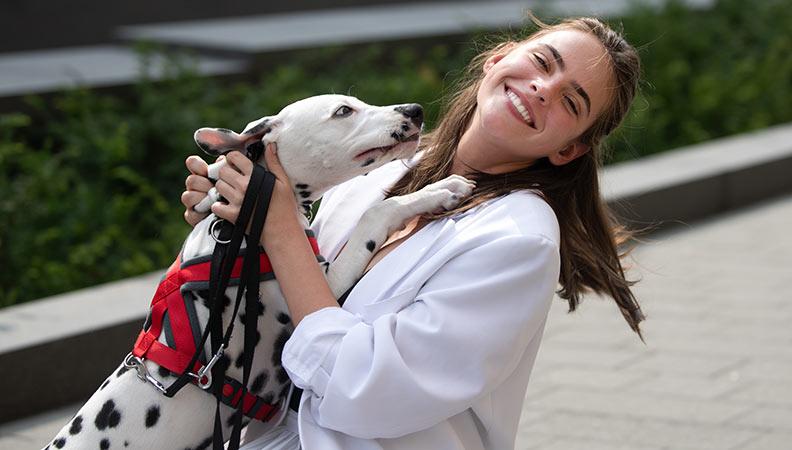
The seemingly unending happiness of dogs and puppies is one of the main reasons we love them so much. But what happens when all that joyous energy starts to become an issue?
Knowing how to calm an excited dog in the car or other stressful environments is an important skill, as it can help keep you, your pup, and others around you safe and calm.
Dogs have so many different personalities and temperaments. Is your dog hyperactive, full of energy and generally excitable? If so, we can share some simple yet effective ways to keep your dog calm and chilled!
How to calm an overexcited dog?
Sometimes, no matter how well-trained your dog is, they can still get overexcited in certain situations, like when your dog sees you first thing in the morning, when it's dinner time, or when they meet up with their favourite doggy friends.
Some of these situations may cause your dog to get overly excited and start spinning in circles, or get the dog zoomies! This may seem funny and cute, but if you have a big dog or children, it could be dangerous.
Unwanted behaviour needs to be nipped in the bud. Teaching your dog to stay calm can be easier said than done, but it's possible. Dog training can start at any age; even adult dogs can be taught to stay calm. If you have a puppy, start training them early on to stay calm in any situation.
7 top tips on how to calm an overexcited dog
Whether you're searching for how to calm an excited dog when walking or in another exciting or stressful environment - like the car or vets - there are some things you can do to bring their energy down. Here are some of our top tips for calming excitable pups.
1. Training
Firstly, and most importantly, don't encourage excitement. Keep calm! If you're calm, your dog will follow your lead. But if your dog still gets excited, ignore them. Don't look at them, touch or talk to them, just completely ignore them and walk away. They'll soon calm down and wonder why you have walked off.
Be consistent, watch their body language, and only reward your dog with treats if they stay calm. Also, make sure your dog's recall training is up to scratch so you can call them back when a situation gets too exciting.
Consistent training with dog treats or a combination of clicker training and treats can help owners train their dog to calm down in all sorts of potentially excitable situations.
2. Exercise at the dog park
Exercise is so important when dealing with an excitable dog. Wear your dog out with lots of physical and mental stimulation. A bored dog will only get up to mischief and become excitable at the drop of a hat!
Take your dog to a safe space where they can run around and burn off excess energy. Take some of their favourite toys with you to keep them engaged and wanting to play more. If you take your dog to the local dog park, they can get even more exercise by playing with other dogs.
The more exercise your dog gets, the less excitable they will be!
3. Calming treats for dogs
You may wonder if these really do work! Well, you'll be surprised. In fact, some calming treats are recommended by vets to reduce stress, anxiety and excitability.
Calming treats are often made with natural ingredients known for their stress-reducing properties, such as ginger, magnesium, passionflower, and tryptophan. Not all dogs respond to calming treats, but they're worth a try as they won't cause any harm.
However, do check the ingredients of any calming treats or supplements you decide to feed your dog to ensure they don't contain anything your dog may already be allergic to.
4. Calming dog bed
There are many calming dog beds on the market. Most of them are circular with a very deep, soft filling and supporting sides.
The idea behind these is that they replicate the feeling your dog had as a puppy, being comforted by their mother or brothers and sisters in their litter. This, along with the bed's deep sides, is thought to give your dog a calming feeling and sense of security.
Whether this is true or not hasn't been scientifically proven, but there's no harm in giving one a go if you think it may help your dog.
5. Calming music for dogs
We know that music has a positive effect on us, and studies have now shown that dogs respond well to calming music as well.
Research by Johsua Leeds, a psychoacoustic expert, and Susan Wagner, a veterinary neurologist, found that 80% of dogs in private homes exhibited fewer anxiety symptoms when listening to piano music.
But, in a piece for the BBC, it's also thought that dogs become less agitated after hearing classical, reggae or soft rock music. They were also found to sleep more and bark less with this type of music playing.
Compositions, like instrumentals, with simple arrangements and slow tempos tend to have the most calming effect. Why not give it a go?! You'll soon know whether it makes a difference to your dog.
6. Calming dog plug-in
Dogs have an incredible sense of smell. Some dogs' sense of smell can be up to 10,000 times better than ours! Just as calming scents can help us relax, they can help dogs relax, too.
Scents like coconut, ginger, valerian and vanilla have been proven to have the potential to reduce stress in dogs. You can test this out on your dog quite easily!
Simply put a couple of drops of each scent onto a piece of fabric and see which one they respond positively to. Once you've identified a scent that seems to calm your dog, you can get a dog calming plug-in to use at home.
Pheromone diffusers are another option. These release artificial pheromones that we can't smell, but your dog can! Dog Appeasing Pheromone (DAP), in particular, is secreted from glands around the mother's nipples. It helps her puppies feel safe and secure. DAP diffusers can have calming effects in young and adult dogs.
7. Behavioural therapy
If you're struggling to keep your dog calm, despite trying some of the methods we've already suggested, you may need to seek professional help.
Dog trainers are experts in their field and will be able to help you with any continuing excitability issues you may be having with your dog. It's rare for dogs not to get excited at times, but excessive excitability can cause problems.
Taking the time to train your dog sympathetically, using positive, reward-based methods, will help with any issues. There are other methods to help calm your dog, including calming treats, a calming dog bed, music and scents.
But if all else fails, getting help from a professional dog trainer is also an option. Don't give up hope; there are lots of options to explore.
Everypaw Dog Insurance
Everypaw's Dog Insurance comes with 24/7 unlimited access to vets and vet nurses that can help with your pet's health, care, nutrition and behaviour. So you can rest assured your pup will be well looked after.
Content provided from by Vetstream's Vetlexicon Canis
Vetlexicon is the world’s largest peer-reviewed online clinical reference source. All our content is written and peer-reviewed by over 1,000 of the world’s leading veterinarians, ensuring relevance, accuracy and quality.
- Appleby D & Vetstream Ltd (online) Barking. In: Vetlexicon Canis. Vetstream Ltd, UK.
- Appleby D & Vetstream Ltd (online) Boredom. In: Vetlexicon Canis. Vetstream Ltd, UK.
- Appleby D & Vetstream Ltd (online) Destructiveness and chewing. In: Vetlexicon Canis. Vetstream Ltd, UK.
- Vetstream Ltd (online) Basic training for dogs. In: Vetlexicon Canis. Vetstream Ltd, UK.
- Vetstream Ltd (online) Exercise – for a healthy, happy dog. In: Vetlexicon Canis. Vetstream Ltd, UK.


