When Can Kittens Go Outside?
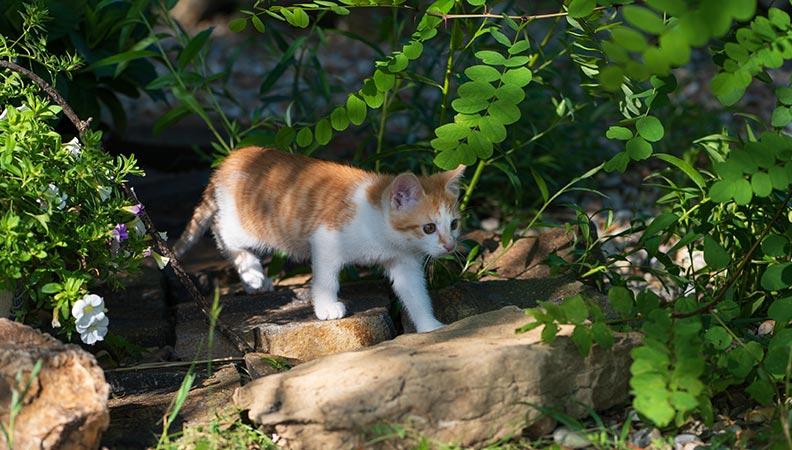
Having a new pet is exciting, and exploring the garden may feel like an enjoyable way to play with your kitten, but there's lots to think about before your kitten is ready to go outside.
If you're asking yourself these questions: How old is a kitten when it can go outside? What do I need to do before I let my kitten outside supervised? When can a kitten go outside on its own? Don't panic! We've got everything you need to know covered in this handy guide.
Does my kitten need to go outside?
Outdoor adventures are a great way to fulfil your cat's natural curiosity. Spending time exploring, jumping, climbing and socialising with other cats can all be beneficial to your kitty's health.
However, outside can be a dangerous place for curious cats - especially in gardens situated close to busy roads. Cat-proof gardens and catios are becoming more popular, allowing our feline friends to explore the garden while protecting them from the increasing traffic on the roads.
Are indoor cats happy?
Cats and kittens can have a happy life whether they're indoors or outdoors. Although experiencing the great outdoors is beneficial to your cat, they don't have to be an outdoor explorer to be happy.
But indoor cats do require more enrichment at home, including climbing trees, platforms, scratching posts, and toys.
When deciding whether to let your cat have access to outdoor space, consider your situation carefully, including your pet's personality and your location, especially your proximity to roads and any nearby dangers.
When can my kitten go outside?
If you're wondering, 'How old are kittens when they can go outside?' A kitten should be older than 5 months before exploring the great outdoors.
Even in a safe environment, there are a few other things to cover before letting your kitten outdoors, including some useful training.
How to get your cat to go outside?
Start by establishing a routine, particularly mealtimes, so that they return for their food at those times. As soon as you bring your new kitten home, put a collar with an ID tag on them to get them used to wearing one. It will also help to reunite you, should they manage to escape.
It's a good idea to train your kitten to come to their name whilst in the house, so that they'll return to your call when outside.
What you need before they can explore freely
In addition to the above training developments, your kitten will also need:
- Complete course of vaccinations
- Microchipping
- Up to date preventative parasite treatment
- Neutering
Plus, they should be settled into a normal routine with no disruption or stress, like building work or vet visits, for at least 14 days before going outside for the first time.
When can a kitten be vaccinated?
Cats can pick up fatal and infectious diseases and viruses outside, so it's important that your kitten is protected with a course of vaccinations.
Their first vaccine is usually given when they're 8-9 weeks old, and the second vaccine is given around 12 weeks old. Yearly booster vaccinations are required after this.
Vaccines are administered by an injection under the skin and protect your cat against:
- Feline panleucopenia/feline parvo virus.
- Feline calicivirus.
- Feline herpesvirus.
- Feline leukaemia virus (optional for indoor cats)
When can kittens go outside after vaccinations?
So, after you've got them all up to date with their jabs, can you start leaving the door open? Well... not exactly.
You should wait at least one week after their second vaccination before letting your kitten go outside supervised. This can vary between vaccines, so it's best to check with your vet.
Why does my kitten need a microchip to go outside?
It's a legal requirement in England for all cats to be microchipped. Having your kitten or cat microchipped means placing a small chip (about the size of a grain of rice, but slightly thicker with rounded edges) under your pet's skin. The chip is then registered with one of the cat microchipping databases.
Should your cat ever get lost, any veterinary practice, police officer or rescue centre will be able to scan their microchip and access your contact details.
It's important to ensure your vet has your correct contact details when microchipping your kitten. But you can update the registered details on your cat's microchip at any time by contacting the database directly.
Why does my cat need to be neutered before heading out?
If your cat is neutered before they go outside, they won't look for a partner and stray too far. It'll also prevent unwanted pregnancies and stop the spread of feline immunodeficiency virus (FIV), which is generally spread by unneutered cats fighting.
Unneutered male cats are more prone to fighting and therefore are more likely to contract FIV, but that doesn't mean female cats are unaffected.
Neutering a male cat means removing their testicles; this can be done from 4 months old. Neutering a female cat involves the removal of their uterus and/or ovaries. Female cats can be neutered from 4 months old, but they need to weigh more than 2kg, so they're often neutered once they're 6 months old.
Letting your cat out for the first time
When you first let your kitten out, it's best to do it just before a meal. Confidently walk into the garden and call your cat, let them follow you. If they're reluctant, be patient; it's important not to rush them.
Once outside, encourage them to sniff and play. Stay close and watch them explore. After 5 minutes, call them, as you would for any other meal, and walk inside. If they do not follow, you may need to shake their food packet or use a toy to lure them inside.
When can a kitten go out on its own?
Gradually increase the amount of time they spend outside with you until you're confident to leave them alone outside for short periods.
For the first few weeks, it's advisable to let them out only before meals. Once they can be trusted to be outside for longer periods, you can install a cat flap, if you wish. It's important to maintain their routine and reward your cat for returning. This creates a good recall routine.
So, when can kittens go outside? This depends on your environment, their vaccination status, their neutering date, their recovery and their behaviour. They should also be protected against parasites. There's no rush with letting them outside, so it's best to be patient and take it slow. Ensuring they're confident, happy and healthy is key to them returning home safely every time.
Everypaw Kitten Insurance
Everypaw's Kitten Insurance comes with 24/7 unlimited access to vets and vet nurses that can help with your pet's health, care, nutrition and behaviour. So you can rest assured your kitty will be well looked after.
Content provided from Vetstream's Vetlexicon Felis
Vetlexicon is the world’s largest peer-reviewed online clinical reference source. All our content is written and peer-reviewed by over 1,000 of the world’s leading veterinarians, ensuring relevance, accuracy and quality.
- Vetstream Ltd & Fear Free (online) Vaccinating your cat. In: Vetlexicon Felis. Vetstream Ltd, UK.
- Sullivan L, Vetstream Ltd & Fear Free (online) Kitten development. In: Vetlexicon Felis. Vetstream Ltd, UK.
- Dawson S, Hosie M, Kennedy M, Squires R & Willett B J (online) Feline Immunodeficiency virus. In: Vetlexicon Felis. Vetstream Ltd, UK.


